
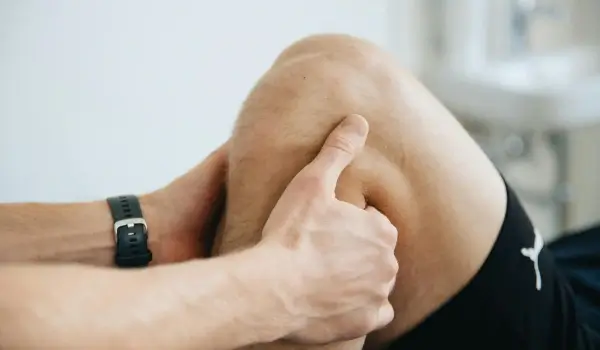
Flexibility and range of motion are two of the most undervalued components of athletic performance. Most people associate them with yoga practitioners or gymnasts, but the ability to move freely through a full range is critical for runners, cyclists, weightlifters, swimmers, and weekend warriors of every kind. When your muscles are tight and your joints are restricted, your body compensates in ways that reduce efficiency, increase effort, and raise your risk of injury. Sports massage is one of the most effective tools available for addressing these limitations, working directly on the soft tissue structures that determine how freely and comfortably your body moves.
Why muscles lose flexibility in the first place
Muscle tightness rarely appears without a cause. Repeated training loads the same muscle groups again and again, leading to the gradual accumulation of tension in the fibres. Micro-tears from intense exercise heal with scar tissue that, without intervention, can bind adjacent fibres together and reduce the muscle’s ability to lengthen fully. Prolonged sitting compounds the problem by keeping certain muscles in a shortened position for hours at a time, training them to resist lengthening even when you ask them to. Dehydration, poor recovery habits, and stress all contribute further. The result is a gradual creeping tightness that limits movement and, over time, begins to affect performance in ways that feel frustratingly difficult to reverse through stretching alone.
How sports massage works on tight tissue
Sports massage addresses tightness through direct mechanical pressure applied to the muscle and surrounding connective tissue. Techniques such as deep tissue work, myofascial release, and cross-fibre friction break down adhesions, the areas where fibres have stuck together through scar tissue or chronic tension, allowing the muscle to return to its natural length and glide freely against neighbouring structures. The pressure also increases local blood flow, bringing warmth and oxygen to tissues that may have become ischaemic from constant contraction. As the muscle relaxes and circulation improves, it becomes more pliable, more responsive to stretching, and more capable of moving through its full intended range.
The role of fascia in restricting movement
Muscles do not operate in isolation. They are wrapped in and connected by fascia, a web of connective tissue that surrounds and interpenetrates every muscle, bone, nerve, and organ in the body. When fascia becomes tight or dehydrated, it can restrict movement just as powerfully as the muscle itself, sometimes more so. Myofascial release techniques used in sports massage apply sustained, gentle pressure to the fascial system, encouraging it to soften and lengthen. This kind of work often unlocks range of motion in ways that feel disproportionate to the effort applied, because releasing one area of fascial restriction can have downstream effects throughout connected regions of the body. Athletes often notice improvements in areas seemingly unrelated to where the massage was focused.
Sports massage versus static stretching
Static stretching is valuable, but it has limitations. Stretching lengthens a muscle by pulling on it from the ends, which is useful for maintaining baseline flexibility but less effective at resolving deep adhesions or fascial restrictions that prevent the muscle from changing length in the first place. Sports massage works from the inside out, addressing the structural reasons why a muscle resists lengthening rather than simply applying external force against that resistance. The two approaches work well together: a sports massage session prepares the tissue by releasing adhesions and improving circulation, making the muscle far more receptive to stretching immediately afterward. Many therapists incorporate assisted stretching directly into a session for this reason, combining the benefits of both in a single treatment.
Specific gains athletes notice after regular sessions
The improvements in flexibility and range of motion that come from consistent sports massage are not abstract. Runners report longer, more fluid strides as hip flexors and hamstrings release. Swimmers find greater shoulder rotation that translates directly into stroke efficiency. Cyclists notice reduced lower back discomfort as chronically shortened hip muscles begin to lengthen. Weightlifters achieve deeper, safer positions in squats and overhead movements as thoracic mobility and ankle dorsiflexion improve. These are not small, marginal gains. In many cases, a restriction in range of motion that has been present for years can shift noticeably within a handful of sessions, particularly when massage is combined with consistent stretching and movement work between appointments.
Making it part of your long-term training plan
The benefits of sports massage for flexibility are cumulative. A single session produces noticeable results, but the most significant and lasting changes come from regular, ongoing work that systematically addresses the patterns of tightness that develop over a training season. Most active people benefit from a session every two to four weeks, with more frequent work during periods of heavy training or competition. Communicating clearly with your therapist about where you feel restricted and what movements feel limited allows them to target sessions precisely toward your specific needs. Over time, the combination of improved tissue quality, better circulation, and reduced fascial restriction builds a body that moves more freely, recovers more efficiently, and stays healthier across the long arc of an athletic life.